
Evaluation of Circadian Lighting as a Supportive Measure for Insomnia Management
- Faculty of Engineering, Universidad Tecnológica Centroamericana, San Pedro Sula, Honduras
Contacto: [email protected]
Conflicto de interés: Sin conflictos
Evaluación de la iluminación circadiana como medida de apoyo para el manejo del insomnio


Background
In 2019, it was estimated that between 6-10% of the world’s population suffered from insomnia, facingboth its nocturnal effects and its consequences on daytime functionality. In today’s society, the average person spends more than 90% of their time indoors under static artificial lighting. This constant exposure to artificial light has raised concerns about its impact on circadian rhythms, leading to the development of circadian lighting systems designed to better align light exposure with our natural biological cycles. In recent years, research in the treatment of insomnia has explored new therapeutic alternatives, including phototherapy.
Objective
Implement a circadian lighting system based on smart LED lights with long wavelengths, aimed at improving sleep quality in people with insomnia.
Methods
- Subject Attributes
- Space Building
- Pre- Therapy Activities
- Therapy
- Post-Therapy Follow-Up
- Data Analysis
- Validation
Results
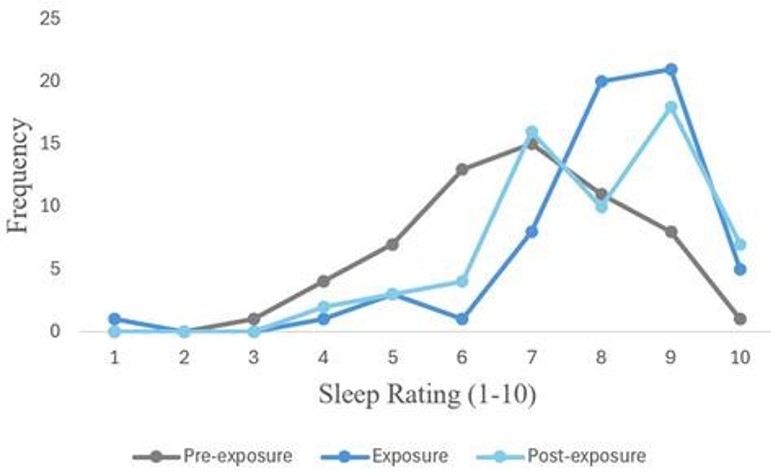
- The tests were conducted with two groups of engineering university students: the control group, consisting of individuals without sleeping problems, and the group with insomnia symptoms, composed of individuals experiencing sleep difficulties. Both groups were monitored by keeping a sleep diary and recording their sleep phases using a smartwatch during three stages: pre-exposure, during exposure, and post-exposure to circadian lighting.
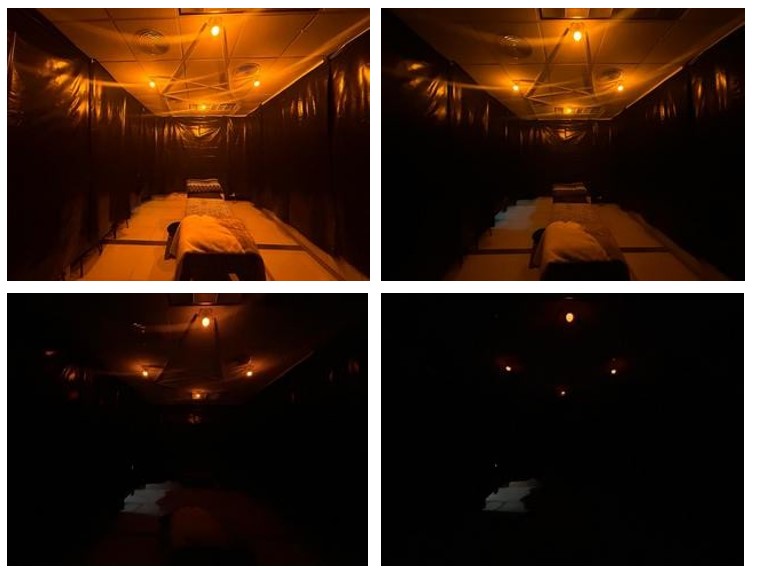
- The study took place in the biomedical engineering laboratory at the university where the participating students are enrolled. Each session lasted 30 minutes, during which the light intensity gradually decreased from 100% to 0%. This progressive dimming was specifically designed to simulate the natural progression of sunset and nightfall, creating a calming atmosphere conducive to relaxation.
- The results indicate that during the week of circadian lighting exposure, 100% of the participants in the experimental group with insomnia symptoms demonstrated an improvement in deep sleep duration. essential phase for physical restoration, memory consolidation, and immune system regulation. Additionally, 83.3% improved their average time in REM sleep and total sleep time (TST). In the control group, 83.3% of the participants also exhibited improvement in REM sleep duration during the exposure period; however, only 16.7% showed an increase in deep sleep time, and 50% improved their TST.
- Furthermore, participants in both groups also reported a reduction in the number of nocturnal awakenings and an enhanced perception upon awakening, characterized by increased feelings of energy and relaxation at the start of the day.
Conclusion/Recomendations
Long-wavelength LED circadian lighting improved sleep, especially in people with insomnia. Participants had fewer awakenings, earlier sleep, and better alertness; one stopped medication. Smartwatch data showed longer, deeper sleep. Despite some external factors, results were positive. Professionals endorsed it as a helpful non-drug treatment and recommended longer use.
Future studies should improve noise isolation with soundproofing, verify LED wavelengths using a spectrometer, apply lighting closer to bedtime to reduce blue light interference, and include melatonin saliva tests for objective data. Extending study duration and sample size would strengthen results and support circadian lighting as a non-drug treatment for sleep disorders.








 EN
EN  ES
ES