
Analysis of religious leaders’ perceptions regarding witchcraft and healing in Honduras
- 1 Virtual University, Universidad Tecnológica Centroamericana, Tegucigalpa, Honduras
- 2 Faculty of Engineering , Universidad Tecnológica Centroamericana, Tegucigalpa, Honduras
Contacto: [email protected]
Conflicto de interés: Sin conflictos
Análisis de las percepciones de los líderes religiosos sobre la brujería y la sanación en Honduras

Background
In Honduras few authors have written about witchcraft and healing. analyzes shamanism in the Mosquitia region and its religious practices. More recently, explores witchcraft as a social phenomenon from an exploratory perspective, focusing specifically on the period between 1933 and 1949, during which Honduras was under a dictatorship.
Objective
Grasp the different perceptions of religious leaders regarding the practice of witchcraft and healing in Honduras through statistical and hermeneutical analysis.
Methodology
Mixed approach, combining descriptive methods and hermeneutic perspective.
Number of interviewees: 30 religious leaders
Type of interviewees: Priests, evangelical pastors, and catholic nuns
Instruments: Surveys
Techniques of Analysis: Discourse analysis and statistics
Results
Witchcraft: Fear or Sympathy
Interviewees reveal that they consult their spiritual leaders for two main reasons. The first, and most frequently mentioned, is to seek help when they suspect they are victims of such practices. The second reason is when they are considering alternative solutions to their problems but are concerned about whether it would be considered a sin.
“To ask for help when they believe someone has harmed them.”
(Participant 3, Catholic priest)
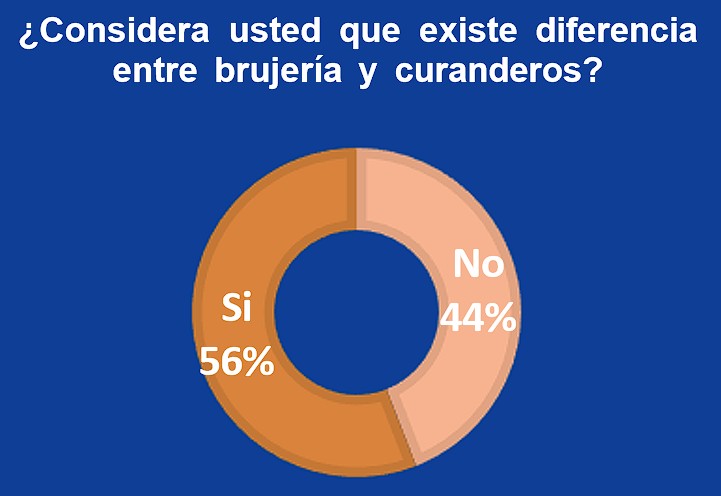
Figure 1. Witches and Healers
Conclusions/Recommendations
- The analysis based on the showed that, over the years, Honduran society continues to believe in the knowledge promoted and produced by both witch doctors and healers.
- Furthermore, the realm of beliefs continues to be contested with religious leaders, resulting in what many social scientists have called religious syncretism, which further complicates the religious diversity of Honduras in the 21st century.








 ES
ES  EN
EN